Destination guide · Updated October 2026
Studying Spanish in Madrid: 2026 destination guide
Madrid is a large inland capital, so Spanish fills your day instead of the sea: in the metro, the markets, the neighbourhood cafés and the tavern where you end up for vermouth on a Sunday after El Rastro. It is a dense, cosmopolitan city of historic quarters, major museums and busy public squares, and it suits students who like long evenings and plenty going on. The neighbourhoods differ a lot in character, from the old royal core to Malasaña and La Latina. You study and live in the one around your school and accommodation, and the rest of the city is a metro ride away. Madrid is much bigger than a coastal or provincial town, so expect a capital's scale and energy.
Madrid at a glance
Closest airport
Adolfo Suárez Madrid-Barajas (MAD)
- Region
- Community of Madrid, central Spain
- Setting
- Dense inland capital with large parks
City size compared to other cities in Spain
3,506,730 inhabitants
- Madrid: 3506730
- Toledo: 87216
- Segovia: 52375
- Ávila: 59107
- Málaga: 599063
- Valencia: 840792
- Barcelona: 1731649
- Granada: 233975
 Madrid suits you if
- Want Spanish around them in daily errands
- Plan museum visits after class
- Enjoy late dinners and long evenings
- Like tapas and raciones in local taverns
- Want summer hiking in the Sierra de Guadarrama
- Prefer city parks to a beach
Look at another destination if
- Want sea and sand between lessons
- Prefer a small, quiet town
- Need a low-budget housing market
- Dislike busy, crowded central streets
- Want a slower, early-to-bed routine
Alternatives nearby: Barcelona
Spanish language schools in Madrid
9 schools offer Spanish courses in Madrid. Prices, reviews and what each school is like are below.
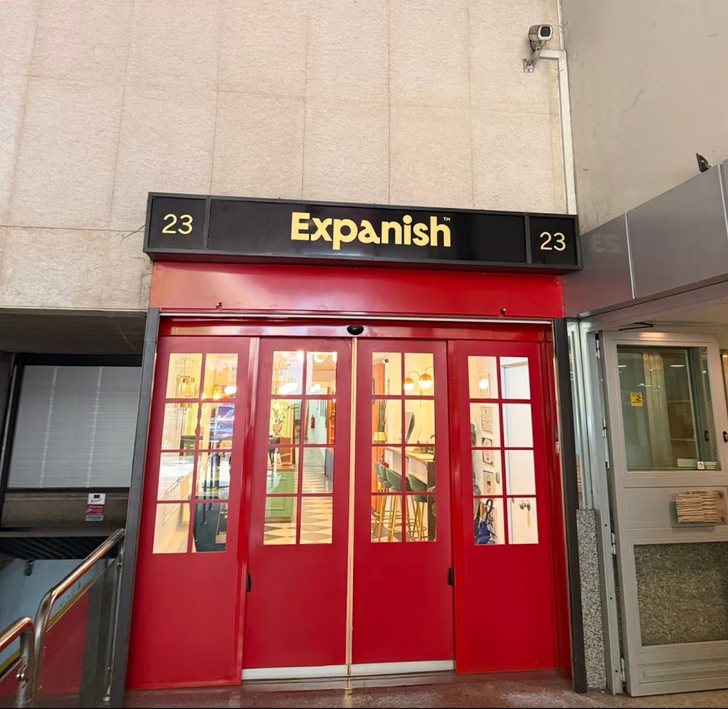
Expanish Madrid
9.8- Max. 12 per class

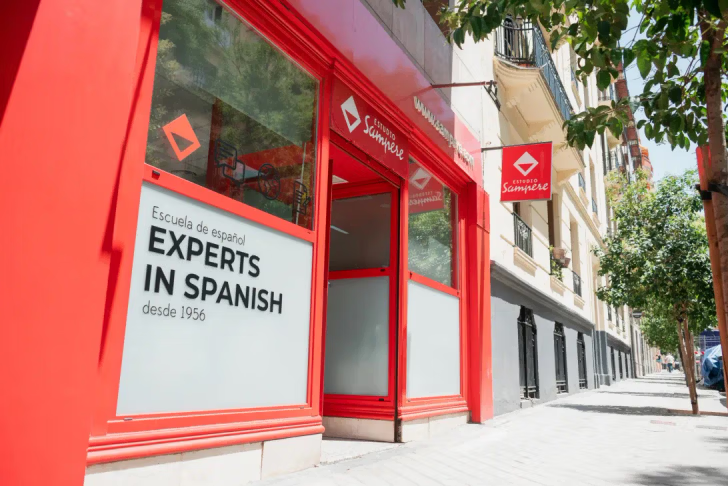
Estudio Sampere Madrid
9.6- Max. 9 per class


Eureka
9.6- Max. 10 per class
- 5 min from the historic centre
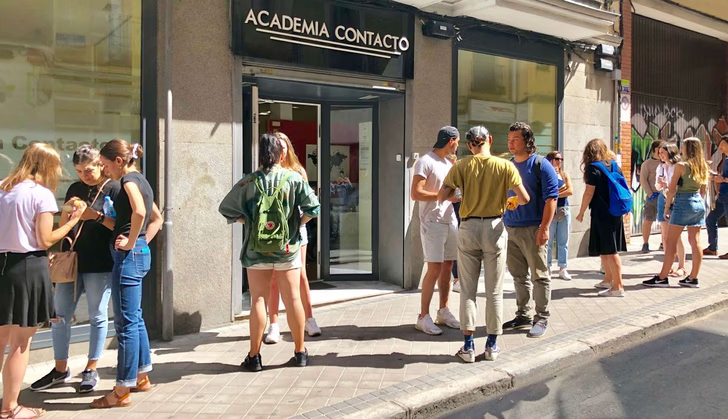
Academia Contacto Madrid
9.4- Max. 10 per class

Tandem Madrid
9.4- Max. 12 per class
- 20 min from the historic centre
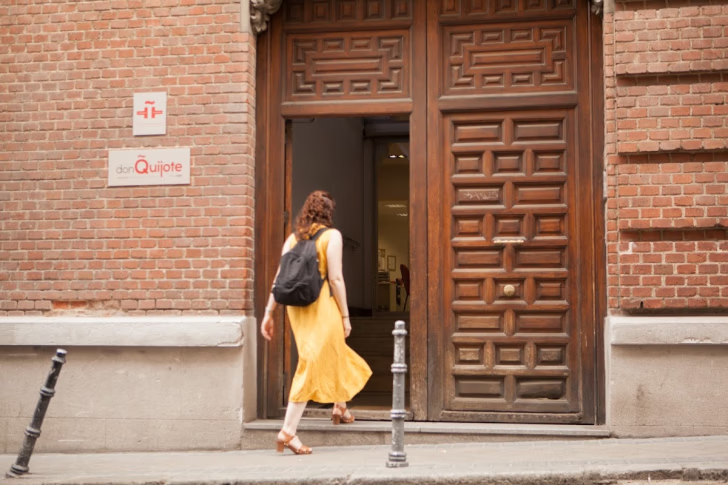
Don Quijote Madrid
9.0- Max. 8 per class
- 22 min from the historic centre
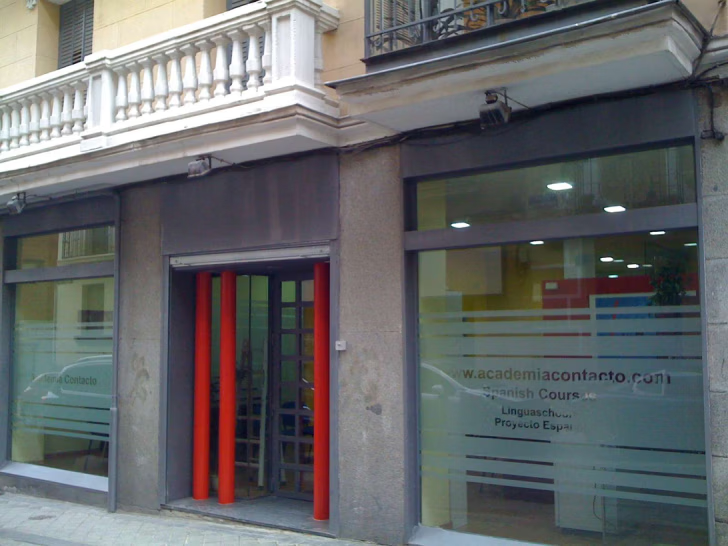
Proyecto Español Madrid
- Max. 10 per class
What students say about Madrid
Madrid earns its praise from students for how easily it fits around a class timetable. Guided tapas tours take students into bars and food stops they might never have found alone. A metro stop close to school keeps the rest of the city within reach. Students also speak well of the neighbourhoods where they studied.
Commonly praised
- The student found the area safe and appreciated its upscale shops
- Nearby metro stops made getting around convenient
- Madrid is described as beautiful
- Explored Madrid landmarks during afternoon classes
- Enjoyed tours discovering Madrid's hidden treasures, tales, and tapas.
- The city was convenient to explore after class
Common drawbacks
- A blackout disrupted transportation during the group’s arrival.
Weekend trips from Madrid
Madrid sits in the Community of Madrid, in central Spain, and its historic towns make easy day trips. Toledo (72 km) and Segovia (92 km) are a high-speed train or bus ride away. Alcalá de Henares and Aranjuez have regional trains, while Ávila and El Escorial have rail and bus links. Manzanares el Real and the Sierra de Guadarrama suit a full day outdoors. Salamanca, Seville and Granada are longer journeys, better saved for a whole weekend.
Places students often explore
Student life in Madrid
Class ends, and the afternoon is yours. Most students head for a museum, a long walk through a historic quarter or a table at a tavern where raciones arrive halfway through the conversation. The central sights, museums and old neighbourhoods are close enough to explore on foot, so a free afternoon rarely needs a plan. Madrid has a large international population, so your friends will come from all over the world. Everyday errands still happen in Spanish, in shops, markets and neighbourhood cafés. Ciudad Universitaria adds a student layer of faculties, halls and green space. Madrid suits a short course as well as a longer stay. Once you settle near your school, you can reach the other neighbourhoods easily and spend your evenings in whichever one fits your mood.
Getting to know the neighbourhoods
Austrias
The historic core of the city. Choose it if you like old streets and major landmarks within easy reach of daily life.
La Latina
Known for tapas and local festivals, including the La Paloma celebrations in August. On Sundays it fills up for El Rastro, and vermouth follows the browsing.
Lavapiés
A culturally diverse neighbourhood, and a good fit if you like a mixed crowd around you.
Malasaña
Associated with vintage shops and alternative culture. It suits students who like browsing secondhand racks before an evening out.
Chueca
Known for its shops, culture and dining. It is a good pick for a relaxed dinner after class.
Barrio de Salamanca
A district for dining and nightlife. Several schools sit here, so students based nearby can walk to class and eat out locally in the evening.
Ciudad Universitaria
The university and student area, with faculties, halls and public green spaces. It gives you a look at the campus side of Madrid.
What everyday student life looks like
- Tapas and vermouth with friends in central markets
- Live music, salsa, jazz and flamenco in the evenings
- Municipal markets and supermarkets for everyday shopping
- Picnics and sports in city parks
- Theatres, cinemas and galleries after class
How Spanish sounds in Madrid
The Spanish you hear in Madrid is urban Peninsular Castilian, the accent most learners picture when they imagine "Spain Spanish". You will hear it at shop counters, on metro platforms and in neighbourhood cafés, so you use it every day. One local habit is laísmo, where people say "la" instead of "le" for a female indirect object ("la di el libro" for "le di el libro"). Your teacher can explain it, and it will make more sense once you start hearing it in local speech. For your immersion tip, join one of the weekly public English-Spanish exchanges in central Madrid. You split the time between both languages and practise with locals as well as other learners.
What a week in Madrid costs
from
€ 100 / week
Course + room at the same school, for a 2-week booking. Excluding flights.
Courses
per week, from- Evening Courses 4 group lessons a week, from 4 weeks Expanish Madrid
- € 47
- Academic preparation courses 20 group lessons a week, from 20 weeks Estudio Sampere Madrid
- € 100
- Pathway Courses Academia Contacto Madrid
- € 120
- General Long Term Courses 20 group lessons a week, from 25 weeks Estudio Sampere Madrid
- € 131
- General + Focus Courses 20 group lessons a week, from 32 weeks Academia Contacto Madrid
- € 143
- General Courses 20 group lessons a week, fixed start dates Proyecto Español Madrid
- € 175
- Bildungsurlaub 25 group lessons a week, fixed start dates Academia Contacto Madrid
- € 265
- Exam Preparation Courses 20 group lessons a week Don Quijote Madrid
- € 325
- General + Private Courses 20 group lessons a week, plus 5 private lessons, fixed start dates Academia Contacto Madrid
- € 330
- 50+ Courses 20 group lessons a week Expanish Madrid
- € 475
- Prive Exam Preparation Courses 10 group lessons a week Expanish Madrid
- € 495
- Private Courses 20 group lessons a week Proyecto Español Madrid
- € 720
Accommodation
per week, from, own room- Shared Apartment own room Proyecto Español Madrid
- € 180
- Host Family own room, breakfast included Proyecto Español Madrid
- € 220
- Shared Flat own room Academia Contacto Madrid
- € 230
- Student Residence own room, half board, shared bathroom Don Quijote Madrid
- € 385
From-prices apply to a 2-week booking outside high season. Book longer and the weekly price drops. Registration fee and materials are not included.
Housing is what stretches a budget in Madrid. Daily spending is moderate, so the room you choose does most of the work in deciding how comfortable your trip feels. Food is where you can save: market bars, bakeries and traditional taverns serve casual meals. If you stay for a month or longer, the youth metro pass is substantially cheaper than the standard adult one.
Things to do in Madrid
After class, Madrid offers a very full evening: a gallery visit, a plate of raciones at a tavern bar, a walk through a park laid out for kings. Culture, food, social life and green space all sit close together. Which activities run depends on the school, the season and your travel dates.
What to do, by the kind of student you are
The Prado, the Reina Sofía and the Thyssen-Bornemisza are the big three for art. The Sorolla Museum and the National Archaeological Museum add two more options. Matadero Madrid and Conde Duque host exhibitions and performances. Don Quijote Madrid organises a guided cultural walking tour and classes on Spanish museums and art.
Start with a bocadillo de calamares, then work up to cocido madrileño or callos a la madrileña. Tascas serve raciones, and the covered Mercado de San Miguel is a place to sample tapas. Mercado de Maravillas and Mercado de la Cebada are traditional markets for everyday food shopping. Rosquillas de San Isidro and torrijas are the sweet things to look for. Expanish Madrid organises tapas tastings.
Tapas and vermouth with friends in the markets and taverns is one very good way to spend an evening. On Sundays, El Rastro in La Latina fills with browsers, and the bars nearby fill with vermouth drinkers. Nightlife runs through Malasaña, Chueca, La Latina and Barrio de Salamanca, with salsa, jazz and flamenco among the options. AIL Madrid organises a welcome tapas and drinks evening.
Retiro is part of the UNESCO-listed Landscape of Light. You can jog its paths or row on its lake. Casa de Campo has woodland, a lake and sports facilities, and you can cycle or mountain bike there. Dehesa de la Villa suits woodland walks and birdwatching. Beyond the city, you can hike in the Sierra de Guadarrama National Park, go horseback riding in the nearby mountains, and ski there in winter where conditions permit.
Best time to study in Madrid
Madrid has hot summers and cool winters, so the shoulder seasons suit most students best. In May the highs reach 22°C, and by June they climb to 28°C with only six rainy days. September stays warm, with highs of 26°C and five rainy days. July and August are the hottest months, with highs above 31°C and evenings that stay mild. Winter is cooler: January highs are under 10°C, and the Sierra de Guadarrama has snow nearby. May also brings the San Isidro festivities around the 15th. May has the most rainy days in the year, and April, October and December follow close behind.
Month by month
| Month | Avg high | Avg low | Rainy days |
|---|---|---|---|
| January | 9.8°C | 2.7°C | 8 |
| February | 12°C | 3.7°C | 8 |
| March | 16.3°C | 6.2°C | 7 |
| April | 18.2°C | 7.7°C | 10 |
| May | 22.2°C | 11.3°C | 11 |
| June | 28.2°C | 16.1°C | 6 |
| July | 32.1°C | 19°C | 3 |
| August | 31.3°C | 18.8°C | 3 |
| September | 26.4°C | 15.4°C | 5 |
| October | 19.4°C | 10.7°C | 10 |
| November | 13.5°C | 6.2°C | 9 |
| December | 10°C | 3.6°C | 10 |
How to get to Madrid and get around
Adolfo Suárez Madrid-Barajas Airport (MAD) is the airport for Madrid. Metro Line 8 runs from the terminals to Nuevos Ministerios, where you can change lines for journeys into the city. The ride takes about 12 minutes from T1-T2-T3 and about 20 minutes from T4. Airport transfers to your accommodation are also available as a service. Once you are in the city, the metro has more than 300 stations and links Madrid with many of its suburbs, while buses and commuter trains add to the network. That makes cross-city trips practical, for class or for an evening out.
Getting there: common questions
Is Madrid safe? What students should know
Madrid is generally regarded as a safe place for students, and university travel guidance describes it as an ordinary big city in that respect. The one concern worth knowing is petty theft, as in any busy European capital. It centres on Puerta del Sol, Plaza Mayor and the metro.
Good to know before you go
- No one can promise safety anywhere. Read "considered safe" as how visitors generally experience the place, not as a guarantee.
- Take the normal precautions you would in any unfamiliar place, especially at night and in busy tourist areas.
- Check your government's official travel advice for the destination before you travel.
- Arrange your own comprehensive travel and health insurance for your stay.
Shops, food and opening hours in Madrid
Madrid eats late, and your day bends around it. Lunch falls in the early afternoon and dinner comes well into the evening, with local tables often filling later still. Many restaurants offer a menú del día, a set lunch. Between meals, market bars, bakeries and traditional taverns serve casual food at lower cost. Shops follow a similar rhythm. Many central businesses stay open through the day, while some smaller ones close for the afternoon break. Do your food shopping before it or after it, and expect ordinary neighbourhood shops to be less available on Sundays.
-
Central shopsMany open from 09:00-10:00 until 20:00-22:00
-
Smaller shopsSome close around 14:00, reopening 16:00-17:00
-
SundaysMany tourist-area shops open; neighbourhood shops more limited
-
Typical lunchUsually 13:00 to 16:00
-
Typical dinnerUsually 20:00 to 23:30, local dining often later
-
Everyday essentialsSupermarkets, neighbourhood food shops and municipal markets
-
Local marketsMercado de Maravillas and Mercado de la Cebada
-
El RastroOpen-air market on Sundays and public holidays
Frequently asked questions about studying in Madrid
Filter by price, course type and reviews, and book directly.
Not sure yet? Ask our language travel advisors, free of charge