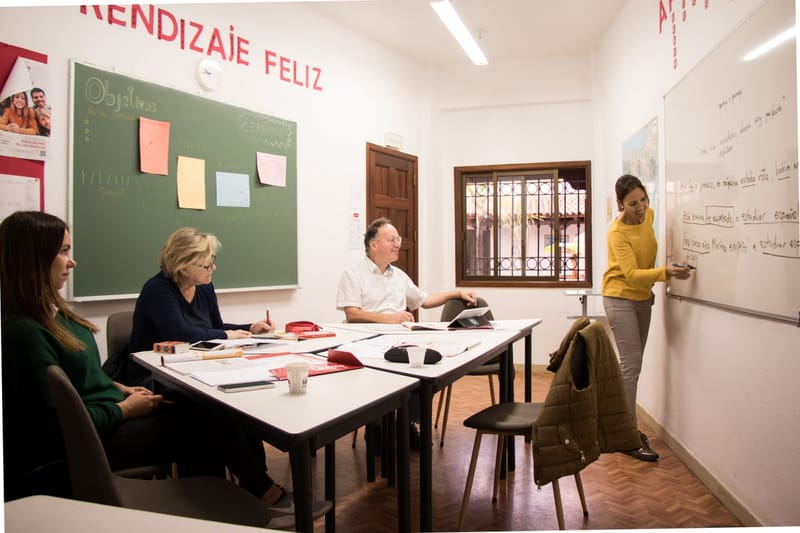
Classes here follow a student-centred, interactive method: lessons build vocabulary, grammar, reading, writing, listening and pronunciation together, moving through six levels from complete beginner (A1) to proficient (C2). Grammar is taught in context, woven into the culture of the Canary Islands rather than drilled in isolation. You take a placement test on your first day and join a group matched to your level, with a certificate documenting your attendance and the level you reach by the end.
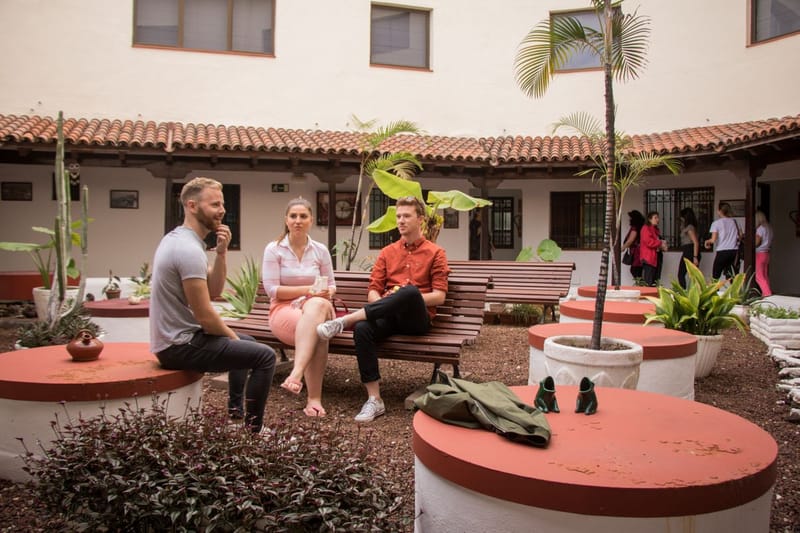
Groups stay small by design, averaging six students and never growing past eight, inside a traditional Canarian building whose central patio, filled with plants, works as both a study corner and a place to sit and talk between classes. The atmosphere is relaxed and personal rather than big and anonymous. The school describes itself as boutique for good reason: ten study spaces, including a library, computer lab and common lounge, sit alongside air conditioning, heating and dedicated student Wi-Fi.
You need to be 18 or older to join a course here. Across the school as a whole, the average age sits around 23 in summer and rises to around 40 the rest of the year, with students arriving from more than a dozen countries and no single nationality making up more than 15% of the mix. The largest groups come from the United States, Brazil, Germany and France.
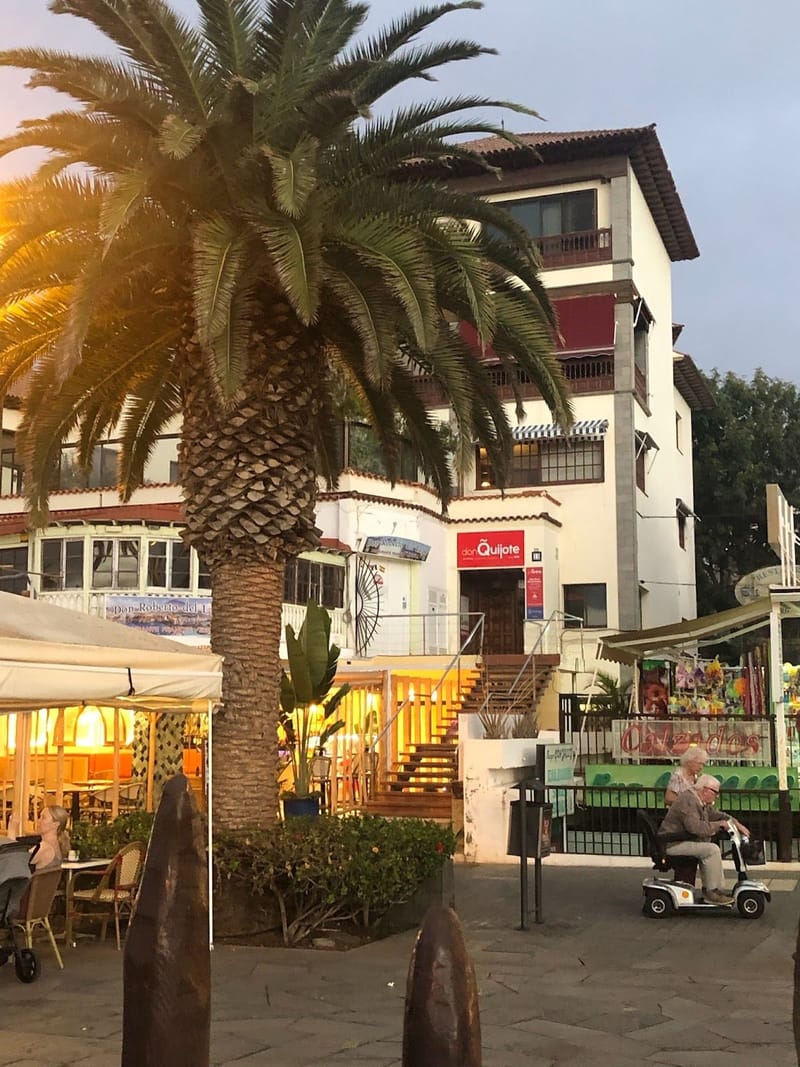
A weekly activity programme adds a fixed rhythm beyond the classroom. A free city walking tour gets you oriented early on, and from there the calendar fills with museum visits, dance classes and film nights. Saturdays are reserved for the bigger trips: excursions out to Mount Teide, Masca or La Gomera, sometimes paired with dinner at a local guachinche. Puerto de la Cruz's town centre is an easy walk from the school, and Martiánez beach is just five minutes away, so lessons, the patio, the beach and the old town all sit within a short stroll of each other.


 Don Quijote is right for you if you…