Destination guide · Updated October 2026
Studying Spanish in Tarifa: 2026 destination guide
On a clear day you can pick out the African coast from the shore at Tarifa, and the wind sweeping across the Strait keeps reminding you where you are. This is a small walled seaside town at Spain's southern tip, where the Atlantic meets the Mediterranean, and it suits students who want Spanish lessons in the morning and the sea in the afternoon. After class you can head for long sandy beaches, the narrow streets of the old town or the protected hills and dunes nearby.
Tarifa at a glance
- 37.9km coastline and beaches
- 2 natural parks
- Best for
- Beach days, hiking and outdoor sports
- Known for
- Sight of the African coast
- Setting
- Seaside town on the Strait of Gibraltar
City size compared to other cities in Spain
- Algeciras: 126589
- Cádiz: 109950
- Jerez de la Frontera: 213634
- Málaga: 599063
- Madrid: 3506730
- Barcelona: 1731649
- Valencia: 840792
- Granada: 233975
You will feel at home in Tarifa if you
- Prefer a small town to a big city
- Like spending free time on the water
- Enjoy hiking, birdwatching or whale watching
- Are happy with a slower, small-town pace
- Like history alongside your beach time
You may prefer another destination if you
- Want a big city with endless options
- Dislike strong winds and changing sea conditions
- Want long evenings of big-city nightlife
Alternatives nearby: CadizJerez de la FronteraBarcelona
Spanish language schools in Tarifa
One school offers Spanish courses in Tarifa. Prices, reviews and what the school is like are below.
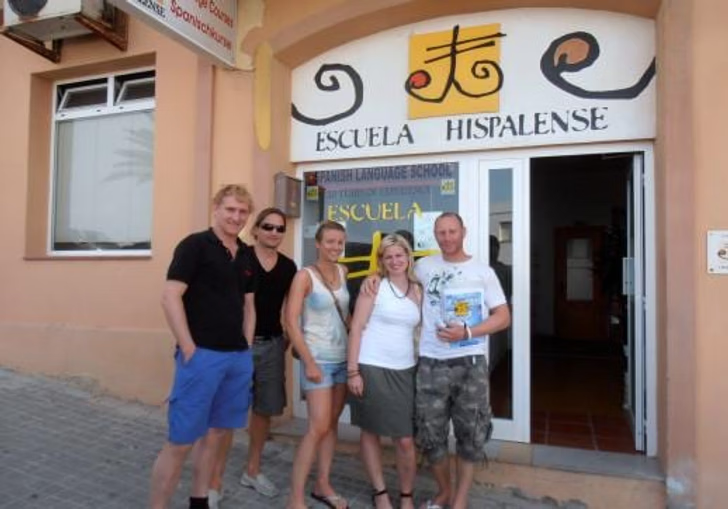
Escuela Hispalense
9.8- Max. 8 per class
- 6 min from the sea
What students say about Tarifa
Students who have studied in Tarifa write warmly about the beaches, which they describe as gorgeous and close enough to reach on foot. Windsurfing gets a mention too. Several also praise the restaurants and the charm of a lively town. The reviews so far are small in number but positive, and none records a drawback.
Commonly praised
- A fantastic place for windsurfing
- Gorgeous beaches are just a minute away on foot
- Tarifa has gorgeous beaches nearby
- Charming, lively town with great restaurants
- Clean beaches and activities that work well for families
- Frequent chances for children to interact with local Spanish kids
Weekend trips from Tarifa
The ferry reaches Tangier in about 35 minutes, and the M-150 bus takes about 45 minutes to Algeciras. Long-distance buses serve Cádiz. Bolonia, which lies within Tarifa municipality, and Algeciras fit a free afternoon or a day. Tangier works as a day trip or a weekend. Gibraltar, Seville and Granada are also possible excursions.
Places students often explore
Student life in Tarifa
Tarifa is small enough that the old town and Los Lances are both reachable on foot from the bus stop. That sets the pattern for the day: you move between the lanes and the sand without needing a plan. The social scene blends traditional Andalusian culture with an international crowd. It is a town for sitting over a plate of food and talking, and conversations start easily when everyone around you is also far from home. A few outings, such as Bolonia, call for a little planning, but daily life stays close to the centre.
Getting to know the neighbourhoods
Walled old town
This is where evenings happen. Traditional courtyard houses line the narrow, winding streets, and the whole quarter is a declared historic-artistic complex. It suits students who like to eat out, hear live music and be in the middle of things.
Los Lances
The beach side of town, west of the centre and reachable on foot from the bus stop. A protected coastal natural area runs along it, which makes it the place for long walks on open sand.
Bolonia
A separate coastal settlement within the municipality, with a broad beach and a large protected dune. It sits apart from the compact centre, so it works as a change of scene rather than as everyday ground.
What everyday student life looks like
- Cycling and hiking routes in the surrounding natural parks
- Horse riding and climbing within reach of town
- A year-round international watersports crowd
- Whale watching in the Strait of Gibraltar
How Spanish is used in Tarifa
Spanish is the everyday language of Tarifa's old town, its tapas bars and its market. The town draws an international kitesurfing and windsurfing crowd, so on the beaches and around the water sports spots you will hear plenty of other languages too. Spanish will not simply surround you all day, so go looking for it. A good first target is the Mercado Público in the town centre. Buy your fish or fruit there, ask in Spanish what looks best that day, and do the same on your next visit. Everyday errands like this give you short, repeatable exchanges where the same phrases come up again and again.
What a week in Tarifa costs
from
€ 362 / week
Course + room at the same school, for a 2-week booking. Excluding flights.
Courses
per week, from- General Courses 20 group lessons a week, fixed start dates
- € 207
- Exam Preparation Courses 5 group lessons a week, fixed start dates
- € 317
- Bildungsurlaub 30 group lessons a week, fixed start dates
- € 332
- General + Private Courses 20 group lessons a week, plus 5 private lessons, fixed start dates
- € 390
Accommodation
per week, from, own room- Shared Apartment own room
- € 155
- Host Family own room
- € 250
From-prices apply to a 2-week booking outside high season. Book longer and the weekly price drops. Registration fee and materials are not included.
The harder spending to predict is on the water. Kitesurfing, diving and horse riding are available in and around town, so decide early how many you want to add to your lessons.
Things to do in Tarifa
Afternoons in Tarifa belong to the wind, the sea and a town small enough to cross on foot. Kitesurfing and windsurfing define the place, and an international crowd of riders gives the beaches their character. Which activities run depends on the school, the season and your travel dates, and some can be arranged independently. Away from the water, there are castle walls, fresh tuna and trails to explore.
Pick your Tarifa
The shoreline is the main attraction. Kitesurfing, windsurfing, surfing, stand-up paddleboarding, wingfoiling and diving are all practised here. Escuela Hispalense organises kitesurfing, windsurfing and diving, and a sea excursion to see whales and dolphins in the Strait of Gibraltar.
The walled old town is a tangle of narrow streets and traditional courtyard houses, entered through the Puerta de Jerez. Guzmán el Bueno Castle, a 10th-century caliphal fortress, stands inside it. The Church of San Mateo is the old town's main historic church.
Fresh Strait tuna and pescaíto frito are the dishes to try, alongside local fish and seafood. Browse the Mercado Público for the produce behind them. In the old town, tapas bars often put on live flamenco, so dinner and a show can happen in the same place.
Protected landscapes surround the town: El Estrecho and Los Alcornocales natural parks, the Los Lances beach area and the Bolonia dune. The trails suit hiking and birdwatching. Cycling, climbing, horse riding and whale watching are also available in the area.
Evenings in the old town are lively, and tapas bars are the natural meeting point after a day on the water. In September the town celebrates Nuestra Señora de la Luz with a Feria and a mounted Cabalgata Agrícola, a procession that accompanies the patron saint from her sanctuary into town.
Best time to study in Tarifa
For swimming, come between July and September, when the sea sits at 20 to 21°C. July averages no rainy days, and August is the warmest month. June and May are milder: June has highs near 25°C and just one rainy day, while the sea is still only 17 to 18°C. Spring sea temperatures stay between 15 and 17°C from March to May, which is cold for anything but a wetsuit. September adds the town's Feria and the Cabalgata Agrícola, a mounted procession honouring Nuestra Señora de la Luz. Winter is mild but wetter, with the most rainy days from December to February.
Month by month
| Month | Avg high | Avg low | Sea temp | Rainy days |
|---|---|---|---|---|
| January | 14.4°C | 9.8°C | 15.6°C | 8 |
| February | 14.6°C | 9.9°C | 15°C | 7 |
| March | 16.2°C | 11.1°C | 15.2°C | 6 |
| April | 17.9°C | 12.5°C | 15.7°C | 6 |
| May | 20.9°C | 14.9°C | 16.8°C | 4 |
| June | 24.7°C | 17.9°C | 18.4°C | 1 |
| July | 27.5°C | 19.9°C | 20.1°C | 0 |
| August | 27.7°C | 20.7°C | 20.8°C | 1 |
| September | 24.8°C | 19.3°C | 20.4°C | 4 |
| October | 21.5°C | 16.8°C | 19.1°C | 7 |
| November | 17.2°C | 13°C | 17.3°C | 7 |
| December | 15.2°C | 11.2°C | 16.2°C | 8 |
How to get to Tarifa and get around
Tarifa has no airport and no train station, so the last leg of your journey is by bus, car or ferry. Jerez and Seville airports have no direct bus to Tarifa. From either, you travel to a bus station and pick up a connection there. Buses link the town with Algeciras, a regional port city about 45 minutes away on the M-150, and long-distance services run to Cádiz and other regional destinations. Once you arrive, you can leave transport behind. The old town, with its narrow streets, and Los Lances are both within walking distance of the bus stop. A car or a seasonal bus only becomes useful for the outlying beaches.
Getting there: common questions
Is Tarifa safe? What students should know
Tarifa is generally a relaxed and easy place to study. The things worth knowing come from the sea and the wind. Open beaches and water sports are exposed to strong winds and changing sea conditions, so check the local forecast before you go out. Late transport to Bolonia and Valdevaqueros is limited, so plan your return journey before you head there.
Good to know before you go
- No one can promise safety anywhere. Read "considered safe" as how visitors generally experience the place, not as a guarantee.
- Take the normal precautions you would in any unfamiliar place, especially at night and in busy tourist areas.
- Check your government's official travel advice for the destination before you travel.
- Arrange your own comprehensive travel and health insurance for your stay.
Shops, food and opening hours in Tarifa
Food shopping in Tarifa centres on the Mercado Público in the town centre. It is open Monday to Saturday, 08:00 to 15:00, and sells fresh food and groceries. That makes it a natural stop on the way home from morning lessons. The hours matter: the market closes mid-afternoon, so do your shopping before or straight after class rather than leaving it until evening.
-
Open Monday to Saturday
-
Fresh food and groceries on sale
-
Located in the town centre
Frequently asked questions about studying in Tarifa
See courses, prices and reviews, and book directly.
Not sure yet? Ask our language travel advisors, free of charge