Destination guide · Updated August 2026
Study Spanish in Benalmádena, a 2026 guide
Benalmádena is really three small towns sharing one municipal name: a whitewashed hillside pueblo, a busy commercial centre at Arroyo de la Miel, and a beach-and-marina strip along the coast. Each has its own pace, all folded into one stretch of the Spain Mediterranean shoreline. It is not a sprawling metropolis like nearby Málaga, and it is not a quiet inland village either. It is a resort town that people actually live in year round, and that changes what your language trip here feels like.
That size is the whole point. You get a relaxed, sun-and-sea rhythm instead of the anonymity of a big city, but you still have a proper commercial hub, a working transport link to Málaga, and enough going on in the evenings that you are not stuck with nothing to do after class. It suits you if you want your Spanish course to sit inside daily life rather than compete with sightseeing fatigue.
What that daily life actually feels like depends partly on you. Benalmádena has a large foreign-resident population and a genuinely international social mix, so English is easy to fall back on if that is your default. If you make a point of ordering, chatting and asking around in Spanish, in the market, at the bar, on the bus, you tend to get real practice out of it. The town will not force immersion on you the way a smaller, more isolated destination might. Here, using Spanish daily is a choice you keep making, not a condition placed on you.
Benalmádena at a glance
- 9km coastline length
- 17+ beaches
- 10min walk to beach
Closest airport
Málaga
- Known for
- Beaches, a marina and a large foreign community
- Setting
- Coastal resort town on the Mediterranean
City size compared to other cities in Spain
78,338 inhabitants
- Benalmádena: 78338
- Málaga: 599063
- Torremolinos: 71329
- Fuengirola: 85211
- Marbella: 159786
- Madrid: 3527924
- Salamanca: 146623
- Seville: 700324
 Benalmádena suits you if
- Want daily beach access without big-city scale
- Like practising Spanish deliberately despite widespread English
- Enjoy a large, multicultural international community
- Want easy rail links to Málaga
- Prefer a relaxed, family-friendly seaside pace
- Want beach, hillside and marina areas nearby
Look at another destination if
- Want many language schools to compare
- Want total Spanish immersion with minimal English
- Seek big-city nightlife and large-scale entertainment
- Dislike relying on transport between separate districts
- Want dramatic natural landscapes over resort scenery
- Prefer one compact centre over three districts
Alternatives nearby: Marbella
Spanish language schools in Benalmádena
One school offers Spanish courses in Benalmádena. Prices, reviews and what the school is like are below.
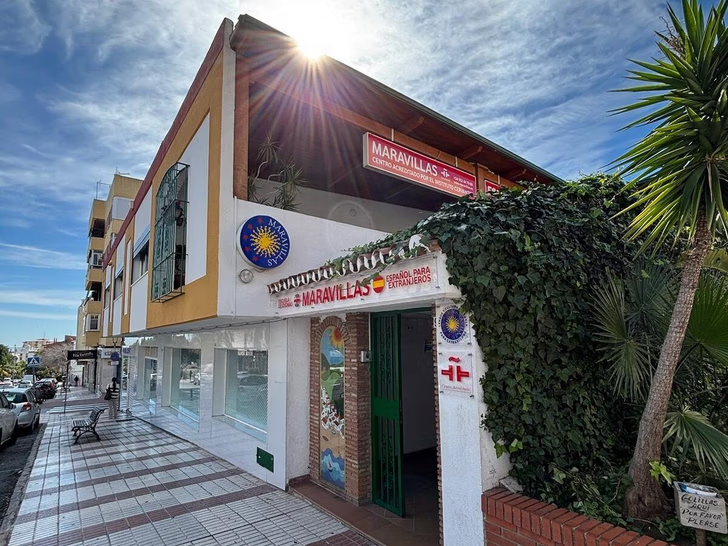
Colegio Maravillas
9.4- Max. 10 per class
What students say about Benalmádena
What stands out here is not the beach or the marina, but the language itself. You get to use your Spanish for real in shops, at the market and over tapas, instead of falling back on English. That works because alongside the tourist scene there is a genuine foreign-resident community living here year-round, so everyday Spanish is on offer if you go looking for it. Ordering in Spanish at the tapas bar or chatting with the market stallholder rather than switching to English is what actually makes the difference.
Commonly praised
- Good opportunities to practise Spanish in daily life
Weekend trips from Benalmádena
Benalmádena sits on the same coastal rail corridor as several other Costa del Sol towns, so short trips are easy to fit around a course. On your own, Málaga, Torremolinos and Fuengirola are all within easy reach for museums, promenades and beaches. Inland, Mijas Pueblo gives you a look at a whitewashed hill village above the coast. For a bigger day out, Colegio Maravillas runs full-day Saturday excursions to Andalusian cities including Seville, Córdoba, Ronda and Granada; which of these run depends on the school, the season and your travel dates, and the independent day trips can always be arranged separately whenever you have a free afternoon.
Places students often explore
Student life across Benalmádena's three districts
Day to day, life here splits into three distinct pockets, and where you end up largely depends on where your school and flat sit. Each district works well on foot for its own shops, cafes and classes, but walking between them isn't really the plan. Pueblo sits up the hillside, Arroyo de la Miel is home to banks, shops and the train station, and Benalmádena Costa runs along the seafront, with Puerto Marina and Plaza Solymar forming its evening hub of restaurants, terraces and pubs. Moving from one district to another usually means a bus, a short train hop or a taxi. If your accommodation is up in one of the hillside urbanisations above Pueblo, a car or reliable bus timing matters more than it does in the flatter centres.
After class, most students gravitate toward whichever district anchors their day: coffee and tapas around Arroyo de la Miel, a walk along the Costa promenade, or an evening around Puerto Marina if there's energy left. The social scene leans heavily international: 35% of residents are foreign nationals, and local events regularly draw more than 140 nationalities. Spanish is genuinely there to practise in shops, markets and everyday errands, but with English so easy to fall back on around the resort areas, using it is a choice you have to make rather than something the town forces on you. For a short stay, this makes for an easy, low-stress base. For a longer one, the three-district structure and steady bus and rail links give you enough variety to settle into a routine without feeling boxed in.
Getting to know the neighbourhoods
Benalmádena Pueblo
The hillside old town, with narrow streets, plazas and a calm, whitewashed character. Compact and easy to explore on foot, and the quietest of the three for daily life.
Arroyo de la Miel
The working heart of town: shops, banks and the train station, all within a walkable commercial core. Its bar scene clusters around Plaza de la Mezquita, smaller and more local than the seafront.
Benalmádena Costa
The seafront resort strip, easy to walk along its promenade, with a holiday feel and direct beach access. In the evening its focus shifts to Puerto Marina and Plaza Solymar, where restaurants, terraces and pubs draw a sociable, tourist-oriented crowd rather than a club scene.
What everyday student life looks like
- Each district is walkable on its own, but moving between them means a bus or train rather than a walk.
- Arroyo de la Miel is where most day-to-day errands happen, from shopping to the train station.
- A car or careful bus timing helps if your accommodation sits up in one of the hillside urbanisations.
- Evenings often mean a stroll along the Costa promenade or a night out around Puerto Marina and Plaza Solymar.
- English is easy to fall back on around the resort areas, so getting real Spanish practice in shops and markets takes a deliberate choice on your part.
The sound of Spanish in Benalmádena
What you hear on the street here is western Andalusian Spanish, the same coastal variety spoken across Málaga province. The clearest giveaway is what happens to the letter s: at the end of a word or syllable it softens to a breath or disappears entirely, so estas can come out closer to "e'tá." You will also notice the d dropping out of words like cansado, plus a fast, fluid delivery where syllables and final consonants get elided in casual conversation. A separate accent guide covers these features in more detail.
English is commonly understood in tourist-facing spots such as restaurants, hotels and the marina, helped along by a large foreign-resident community. That means Spanish will not surround you automatically. The practical fix is simple: order, ask directions and chat in Spanish first, and save English for when you genuinely get stuck.
What a week in Benalmádena costs
from
€ 287 / week
Course + room at the same school, for a 2-week booking. Excluding flights.
Courses
per week, from- Exam Preparation Courses 10 group lessons a week
- € 107
- General Courses 20 group lessons a week, fixed start dates
- € 213
- 50+ Courses 20 group lessons a week, fixed start dates
- € 365
- General + Private Courses 20 group lessons a week, plus 5 private lessons, fixed start dates
- € 378
Accommodation
per week, from, own room- Shared Apartment own room
- € 180
- Host Family own room, breakfast included
- € 260
What you spend day to day
- Set lunch menú del día € 13.50 – € 16
- Coffee café con leche € 1.20 – € 2.15
- Drink in a bar caña € 1.50 – € 3
- Single fare € 2
From-prices apply to a 2-week booking outside high season. Book longer and the weekly price drops. Registration fee and materials are not included.
Benalmádena is mid-range by Costa del Sol standards: cheaper than Marbella, pricier than the inland towns further along the province. It is not a budget destination, but everyday costs stay workable if you know where to spend them. The seafront strip around the marina and the promenade carries a tourist premium on food and drinks, while cafés, supermarkets and restaurants in Arroyo de la Miel and the hillside Pueblo run noticeably lower.
A weekly shop at the supermarket, topped up with produce from one of the local markets, keeps grocery costs manageable and gives you a natural setting to practise Spanish with the stallholders. Restaurant prices climb around the marina and drop a few streets back in Arroyo de la Miel and the Pueblo, where menu del día lunches are the better-value choice if you eat out regularly. Coffees and casual tapas in these inland areas stay affordable for everyday use. Trains and buses keep local transport costs low and cover the airport, Málaga city and the other coastal towns, so a car is not needed to manage your daily spending.
Things to do in Benalmádena
Once class finishes, you have a real choice of how to spend the rest of the day. Climb into the old town for a look at a Moorish-style castle, wander a flea market in Arroyo de la Miel, or head down to the water for a swim and a plate of grilled sardines. Each of the three districts pulls you in a different direction, from quiet cultural sites in the Pueblo to marina life on the coast.
Which activities and excursions actually run depends on the school, the season and your travel dates. Plenty of what follows can also be arranged independently once you are here.
Bil Bil Castle sits right on the seafront, a 1927 building with Nasrid-style tile work and reliefs. Up in the Pueblo, Colomares Castle is a monument built around Christopher Columbus and the voyage to the New World. The Felipe Orlando Pre-Columbian Art Museum holds a collection you will not find elsewhere in the region, and the Benalmádena History Centre covers the town's Roman and prehistoric past. An Arab-style market (zoco árabe) also sets up in the old town.
Arroyo de la Miel runs a Wednesday flea market and an organic produce market on alternating Sundays, good for picking up fresh food and getting a feel for daily life beyond the tourist strip. Seek out espeto (sardines grilled over an open fire on the beach) and pescaíto frito at a chiringuito, and you will find tapas bars in every district.
A cable car runs up Monte Calamorro for views along the coast, with signposted hiking trails continuing from the top. Parque de la Paloma is a large landscaped park with gardens, waterfalls and a lake, a good spot for a break between study sessions, and the Benalmádena Butterfly Pavilion makes for an easy half-day visit. Along the coast, you can arrange paddleboarding and snorkelling on your own, and Colegio Maravillas organises sailing, diving or kayaking sessions at the marina.
Selwo Marina brings you close to dolphins, penguins and sea lions, and the Ice Club rink is an unexpected way to cool off on a hot afternoon. Through the year the calendar fills with local fiestas, including the Virgen del Carmen celebrations, Corpus Christi with its flower carpets, and an international Christmas festival with concerts and events around the marina.
Best time to study in Benalmádena
Summer here leans into its resort character: evenings stretch out along the coast, and Marbella's open-air Starlite concert season nearby gives you a reason to head out after class. If you would rather trade beach heat for mountain air, the cooler months suit a hike through the Sierra de las Nieves much better than midsummer would.
Whichever season you pick, treat these as options to build your own time around rather than a fixed programme: which activities and excursions actually run depends on your school, the season and your travel dates, and some, like a hike through the Sierra de las Nieves, you can also arrange independently.
Getting to Benalmádena and getting around
Málaga International Airport is the nearest airport and the main gateway to Benalmádena, about 12 to 15 km away. The Renfe C1 Cercanías line runs straight from the airport to the Benalmádena/Arroyo de la Miel station in around 15 to 20 minutes. Trains run every 20 minutes, so you are not left waiting long after you land. A taxi covers the same route in about 15 minutes if you would rather skip the platform with your bags. Colegio Maravillas can also arrange a private car transfer from the airport if you prefer to have it sorted in advance.
If you are coming from Málaga city rather than the airport, the same C1 line runs from María Zambrano station to Benalmádena in about 25 minutes. Interurban buses on the Málaga-Torremolinos-Benalmádena route cover the same corridor. Once you are here, urban buses (including the M103) link the town's areas, and the A-7 road runs along the coast if you are travelling by car.
The Pueblo, Arroyo de la Miel and Benalmádena Costa are each easy to explore on foot, from the whitewashed lanes of the old town to the seafront promenade along the Costa. The hillside urbanisations above town are a different story: they are less walkable, so it is worth planning for a bus or taxi if your accommodation sits up there.
Getting there: common questions
Is Benalmádena safe for language students?
Benalmádena is generally considered safe for visitors, and its tourist zones are widely regarded as welcoming to foreigners by day. As in most resort towns on the Spain coast, that reputation still calls for a few sensible habits.
The usual caution applies after dark, particularly around busier nightlife pockets such as Puerto Marina, the Paseo Marítimo and Plaza Solymar, where crowds gather late into the evening. Busy beaches, the promenade and these same nightlife spots can attract petty theft and pickpocketing, so keep bags zipped and phones out of back pockets when things get crowded, whether you are at the marina at night or on the beach by day.
Good to know before you go
- Safety perceptions are personal and can change. Treat any "considered safe" description as general perception, not a guarantee.
- Take the normal precautions you would in any unfamiliar place, especially at night and in busy tourist areas.
- Check your government's official travel advice for the destination before you travel.
- Arrange your own comprehensive travel and health insurance for your stay.
Shops, food and opening hours in Benalmádena
Shopping here follows the same rhythm as most of Andalusia. Large supermarkets open from 9am and close somewhere between 9.30pm and 10pm, depending on the store. Smaller independent shops split their day instead: open in the morning, closed for a few hours in the afternoon, then open again into the evening. Sundays are the exception to plan around. Many smaller shops shut entirely, though supermarkets and stores in the tourist-facing parts of Benalmádena open on selected Sundays and through the summer season, when trading rules loosen for visitor areas.
Meal times run later than you might expect if you are used to eating earlier. Lunch is the main meal of the day, eaten between 1pm and 4pm. Dinner service starts at 8pm and can run past 11pm on weekends. Check the hours of the place you have in mind and plan your meals around that window rather than showing up early.
-
Supermarket and shop hoursLarge supermarkets open from 9am and close between 9.30pm and 10pm. Smaller shops close for a few hours in the afternoon and reopen into the evening.
-
Sundays are quieter for shoppingMost small shops close on Sundays. Some supermarkets and shops in the tourist areas open on selected Sundays, especially in summer.
-
Lunch and dinner run laterLunch is eaten between 1pm and 4pm, and dinner service starts at 8pm and continues past 11pm.
-
Affordable eatingA menu del día (a fixed-price lunch menu) is easy to find in Arroyo de la Miel and Benalmádena Pueblo, and tapas bars offer a cheap, casual way to eat well between classes.
-
Everyday essentialsChain supermarkets, pharmacies and weekly street markets are spread across all three districts, so basics are never far away wherever you are based.
Frequently asked questions about studying in Benalmádena
See courses, prices and reviews, and book directly.
Not sure yet? Ask our language travel advisors, free of charge