Destination guide · Updated October 2026
Studying English in Edinburgh: 2026 destination guide
Edinburgh is a mid-sized capital of dark stone, steep closes and changeable skies, and it suits students who like to learn by wandering. The medieval Old Town and the Georgian New Town together form a UNESCO World Heritage Site. In 2004 the city also became the world's first UNESCO City of Literature, which explains the bookish streak in its museums, festivals and cafes. The Firth of Forth gives the city a coastline, After class, expect a museum, a walk up a hill and a pub table before dinner.
Edinburgh at a glance
- 28km coastline length
- 7 city hills
- Best for
- History, books and hill walks
- Known for
- Castle, festivals and literary heritage
- Region
- Central Belt of Scotland
- Setting
- Capital on the Firth of Forth
City size compared to other cities in Scotland
531,370 inhabitants
- Edinburgh: 531370
- Glasgow: 654330
- Dundee: 148390
- Stirling: 94040
- London: 9122909
- Brighton: 284170
- Manchester: 588256
- Bournemouth: 405829
- Oxford: 165940
You will feel at home in Edinburgh if you
- Like exploring a city on foot
- Enjoy museums, galleries and bookish events
- Want Pentland Hills walks south of the city
- Like a promenade beach at Portobello
- Enjoy cafes, markets and pub evenings
- Want easy day trips by train
You may prefer another destination if you
- Want a language school choice beyond one
- Need dependable warm, sunny weather
- Want a quiet town rather than a capital
- Want a budget-friendly city for your trip
- Prefer a modern skyline to medieval streets
Alternatives nearby: Oxford
Language schools in Edinburgh
One school offers courses in Edinburgh. Prices, reviews and what the school is like are below.
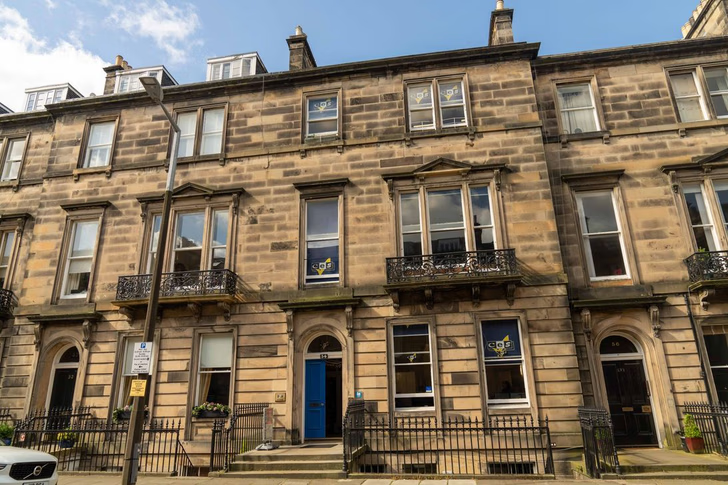
CES Edinburgh
8.6- Max. 16 per class
- 10 min from public transport
What students say about Edinburgh
Reviews of Edinburgh are still few, so each one reads as an individual experience rather than an established pattern. The students who have written so far give the city a high overall mark.
Common drawbacks
- Edinburgh was considered expensive
Day and weekend trips from Edinburgh
Edinburgh is in Scotland's Central Belt, so most trips start at the station. Direct trains reach Linlithgow in about 20 minutes and North Berwick in about 30. Glasgow and Stirling take about 50. South Queensferry is a short train ride plus a walk, and the Pentland Hills are under an hour away. All of these fit a free afternoon or a full day. St Andrews, Loch Lomond and Pitlochry are worth a longer stay.
Places students often explore
Student life in Edinburgh
Edinburgh has a large international and student population, so you are rarely the only newcomer at a café table or a pub quiz. Evenings gather around the pubs, bars and restaurants of the Old Town, Grassmarket and West End, and frequent cultural events keep the calendar full. Between lessons, most students drift towards museums, independent cafés and walks through historic streets. Your classmates come from many countries, which makes friendships easy to start, while the city keeps its own distinctly Scottish character. A short stay is enough to cover the main sights. A longer one gives you time to get to know each district properly.
Getting to know the neighbourhoods
Old Town
Medieval and crowded with history, with pubs in the Grassmarket that fill up after class. Good if you want your evenings close to the action.
New Town
Georgian architecture sits beside the West End, where the pubs and restaurants cluster. A natural base for study and a night out.
Stockbridge
Independent shops, cafés and parks, with a market on Sundays. It suits a slow weekend morning.
Leith
A waterfront district with a Saturday market and a good choice of places to eat.
Southside
Home to the university, museums and leafy spaces. Quieter afternoons suit it well.
Portobello
A seaside suburb with a promenade and cafés. It is a trip out of the centre, so save it for days off.
What everyday student life looks like
- Bus, tram and train stops about ten minutes from the language school
- Museums and free galleries to visit after class
- Walks through historic streets between lessons
- Live music and street food at The Pitt in Granton
- Markets across several neighbourhoods
- Parks, gardens and hills for time outdoors
How English is spoken in Edinburgh
Ask for directions on the Royal Mile and you will hear English with a Scottish lilt, though not in a single voice. Edinburgh speech sits on a continuum between Scottish English and Scots, so vocabulary and accent shift with the speaker, their background and their neighbourhood. There is no uniform Edinburgh accent to learn. That variety is useful practice, because your ear learns to adjust to several voices. English is the dominant everyday language in shops, cafes, markets and public spaces, with Scots and other languages also present, so you will use it constantly without trying. For one immersion tip, join an English conversation cafe. Conversation groups meet in Leith and Gorgie, and you can practise with locals and other learners over a coffee.
What a week in Edinburgh costs
from
£ 564 / week
Course + room at the same school, for a 2-week booking. Excluding flights.
Courses
per week, from- General Long Term Courses 20 group lessons a week, fixed start dates, from 24 weeks
- £ 270
- General Courses 20 group lessons a week, fixed start dates
- £ 290
- Young Adult Programmes 20 group lessons a week, fixed start dates
- £ 290
- Teacher Training 20 group lessons a week
- £ 405
- Exam Preparation Courses 10 group lessons a week, fixed start dates
- £ 410.00
- General + Focus Courses 20 group lessons a week, fixed start dates
- £ 560
- Prive Exam Preparation Courses 6 group lessons a week, fixed start dates
- £ 645
- General + Private Courses 20 group lessons a week, plus 6 private lessons, fixed start dates
- £ 645
Accommodation
per week, from, own room- Host Family own room, half board
- £ 294
- Student Residence own room
- £ 420
From-prices apply to a 2-week booking outside high season. Book longer and the weekly price drops. Registration fee and materials are not included.
Edinburgh is not a cheap city. Student living costs are high, and accommodation is the biggest expense by a clear margin. Food is where you can win some of it back: Aldi and Lidl keep the weekly shop affordable, and cooking for yourself holds down daily spending. Eating out is a mixed picture, with budget casual meals on one side and restaurant bills that climb quickly on the other. Much of the city centre is walkable, so a transport budget matters mainly for longer bus or tram journeys, where a travel pass cuts the cost if you ride often.
Things to do in Edinburgh
Edinburgh gives you plenty to fill the hours after lessons: castle ramparts, free galleries, Saturday stalls, a hill to climb before dinner. Which activities run depends on the school, the season and your travel dates, and some can be arranged independently. The cards below are sorted by the kind of week you want.
Edinburgh Castle and the Royal Mile make an obvious first day, and the Palace of Holyroodhouse is also on the historic route. The National Museum of Scotland and the free galleries suit a wet afternoon. If you like your history darker or more bookish, try Surgeons' Hall Museums or the Writers' Museum. Literary events and book festivals are part of the city's calendar.
Start with haggis, neeps and tatties, then work through Cullen skink and cranachan. Shortbread and tablet cover the sweet end. The Edinburgh Farmers' Market on Castle Terrace, the Grassmarket Market, Leith Market and Stockbridge Market offer places to browse.
Holyrood Park puts hill walking inside the city. The Royal Botanic Garden Edinburgh is a calmer choice for a slow afternoon. The Pentland Hills Regional Park, south of the city, has walking routes with views back over Edinburgh. At Portobello you can walk the promenade and the sandy shore, and swim in the designated bathing water. Cramond has sandy beaches and an exposed tidal shore.
Meet people over coffee at neighbourhood cafes or in the pubs around the Grassmarket. Live music and street-food events run at The Pitt in Granton, and city festivals bring live performances.
Best time to study in Edinburgh
July is the warmest month, with highs of 18°C, and August has the warmest sea at Portobello, where swimming is possible at the designated bathing water. August is also when the Festival and Fringe fill the city with literary and performing-arts events. September stays mild, with fewer rainy days than the summer months. Winter has its own calendar: the Christmas Market and Hogmanay shape December, and Burns Night suppers bring haggis to the table in January, the coldest month in the table below. Between April and May the days warm up steadily, and the Pentland Hills are within easy reach of the city.
Month by month
| Month | Avg high | Avg low | Sea temp | Rainy days |
|---|---|---|---|---|
| January | 6°C | 2°C | 5°C | 14 |
| February | 7°C | 2°C | 6°C | 13 |
| March | 8°C | 3°C | 6°C | 13 |
| April | 11°C | 4°C | 10°C | 11 |
| May | 13°C | 7°C | 12°C | 13 |
| June | 16°C | 10°C | 16°C | 15 |
| July | 18°C | 12°C | 15°C | 15 |
| August | 17°C | 12°C | 17°C | 15 |
| September | 15°C | 10°C | 15°C | 12 |
| October | 12°C | 7°C | 12°C | 14 |
| November | 9°C | 4°C | 9°C | 14 |
How to get to Edinburgh and get around
Edinburgh Airport sits about 13 km from the city centre, and three routes link the two. Edinburgh Trams run between the airport and the centre, and the journey takes around 30 minutes. The Airlink 100 express bus covers the same stretch by road. Taxis are available at the airport, which suits heavy bags and a late arrival. Once you are in the city, the centre and local high streets are walkable, and two-thirds of residents travel on foot or by wheel at least five days a week. Expect steep closes and cobbles, so wear sensible shoes. Some city-centre trips are easy on foot. For longer journeys, Lothian buses and Edinburgh Trams connect the neighbourhoods. A travel pass brings the cost down if you ride often.
Getting there: common questions
Is Edinburgh safe? What students should know
Edinburgh is generally regarded as a safe city for students, and university guidance points to a low crime rate. The one routine concern is pickpocketing in crowded tourist areas, mainly the busy Old Town streets and the closes off the Royal Mile.
Good to know before you go
- No one can promise safety anywhere. Read "considered safe" as how visitors generally experience the place, not as a guarantee.
- Take the normal precautions you would in any unfamiliar place, especially at night and in busy tourist areas.
- Check your government's official travel advice for the destination before you travel.
- Arrange your own comprehensive travel and health insurance for your stay.
Shops, food and opening hours in Edinburgh
Many Edinburgh shops open around 09:00 and close at 17:00 or 17:30, so a late afternoon errand can find the shutters down. Supermarkets and convenience stores stay open later into the evening, which is when most students do the weekly shop. Sundays are a normal trading day: shops open, though hours vary by retailer. Lunch usually falls between 11:30 and 13:30, and dinner between 17:00 and 19:00, so plan an early evening meal. Saturday and Sunday are market days, with produce and street food to browse. Between self-catering and a quick bite out, the budget end of the city works well.
-
Cafes and casual eateriesAffordable lunches
-
Supermarket meal dealsBudget option for students
-
Supermarkets and convenience storesGroceries and household basics
-
PharmaciesFound across city neighbourhoods
-
Farmers' marketsFresh produce and local food
Frequently asked questions about studying in Edinburgh
See courses, prices and reviews, and book directly.
Not sure yet? Ask our language travel advisors, free of charge